
Hydrogen fuel cell design analysis to optimize flow paths within the cell core

Background
Hydrogen fuel cells generate electricity through the direct electrical reaction of hydrogen and oxygen within a cell, rather than by combustion. The only product is water, and so they provide a safe and environmentally friendly energy source for a wide range of applications. Element Digital Engineering were asked to provide design analysis support to the developer of an industrial-scale fuel cell. In particular, they were to help optimize the flow paths within the core of the cell.
The challenge
The performance of the cell in normal operation was governed by the effectiveness with which an optimum mixture of the reactants was supplied to the cell. Various manifolds and distribution systems fed the cell system, and our work was to ensure that the design of these fluid systems gave the best possible distribution. A secondary requirement was to ensure that the start-up and shut-down processes worked properly, again though optimizing the design of the various flow paths dedicated to those stages of the operation.
The solution
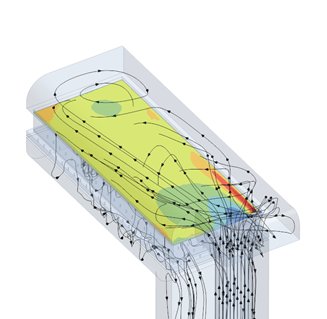
We used Computational Fluid Dynamics (CFD) to build a detailed 3D model of the device and simulate the flows and reactions within it. CFD divides the various volumes within the device into millions of small computational cells, within which the equations of fluid flow are solved. This model was then used to assess various changes to the design and automatically optimize the shape of key components. Over the course of the project (almost eighteen months), many models were built of specific components and operating scenarios.
The result
Through our comprehensive CFD analysis and optimization process, the client achieved significant improvements in their hydrogen fuel cell design. The refined flow path architecture delivered substantially more uniform reactant distribution to all areas of the cell core, enhancing overall electrical output and efficiency. Most notably, our work transformed the start-up and shut-down processes, eliminating previously problematic areas of flow stagnation and ensuring smooth transitions between operational states. These improvements resulted in a more reliable, efficient, and commercially viable industrial-scale hydrogen fuel cell system. Element provided a solution that could reduce physical prototyping costs, accelerate development timelines, and position technology for successful market introduction as a clean energy solution for industrial applications.
By Engaged Expert

Why Choose Element

Industry-Leading CFD Expertise
Comprehensive Analysis
Cutting-Edge Methods
Collaborative Approach
Related Services
Hydrogen Testing
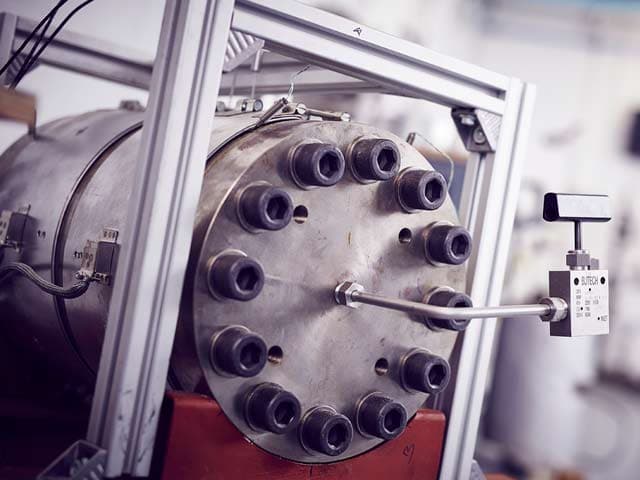
Element performs hydrogen testing, including hydrogen piping system and pipeline testing according to ASME B31.12, the most comprehensive standard currently available for designing steel piping systems that carry gaseous hydrogen.
Computational Fluid Dynamics
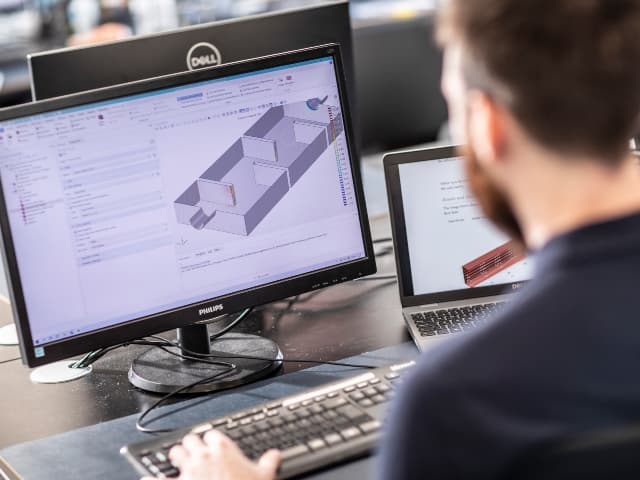
We use Computational Fluid Dynamics (CFD) to simulate and analyze complex problems involving fluid-fluid, fluid-solid, and fluid-gas interactions.
Speak to our team of experts
Text here 8bdb1ae8-a7e3-ef11-8ee9-6045bda94f09